HR Competitive Advantage Report

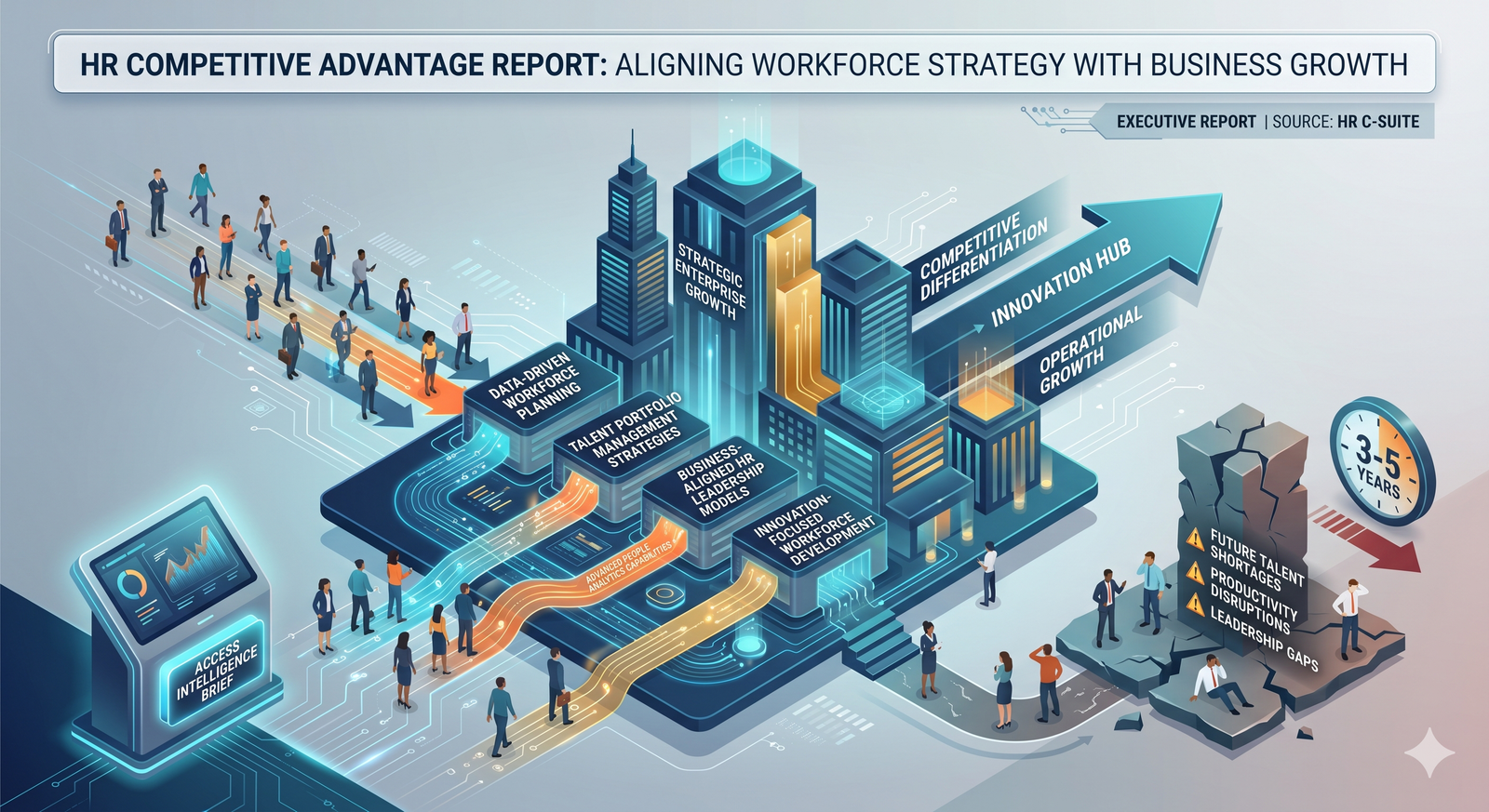
Organizations that align workforce strategy with business objectives consistently outperform competitors in talent acquisition, innovation, and operational growth.
HR is increasingly shifting from an administrative function to a strategic driver of business performance and competitive differentiation.
Leading enterprises now use workforce planning, analytics, and talent intelligence to strengthen long-term growth and organizational resilience.
Companies that manage talent with the same rigor as financial and technology investments gain a measurable competitive advantage over peers.
Strategic HR enables leaders to anticipate workforce gaps, improve hiring outcomes, and align talent capabilities with future business priorities.
⚠ Organizations that fail to modernize workforce planning may face critical talent shortages, productivity disruptions, and leadership gaps within the next 3–5 years.
For HR and business leaders, workforce intelligence is becoming essential to support innovation, succession planning, and sustainable growth across enterprise operations.
- Data-driven workforce planning
- Talent portfolio management strategies
- Advanced people analytics capabilities
- Business-aligned HR leadership models
- Innovation-focused workforce development
Enterprises that elevate HR into strategic decision-making gain stronger agility, improved retention, and greater market competitiveness.
Enterprise Workforce Strategy Assessment
Gain executive insights into how workforce strategy impacts business growth, talent readiness, and competitive positioning.
✔ Workforce risk analysis
✔ Talent capability evaluation
✔ Strategic planning framework
✔ Executive growth recommendations
Download Full Report✔ Workforce risk analysis
✔ Talent capability evaluation
✔ Strategic planning framework
✔ Executive growth recommendations